Table of Content

Poker online: rules, strategy, demo and real money play

"Understanding withdrawal rules and verifiable terms must come before reviewing any bonus or promotional offer. A useful review of poker platforms starts with what can be verified: the licensing, the operator conditions, and the real difference between demo learning and real-money risks." - Claire Bennett, Senior Content Editor

Quick summary: This guide covers everything an Australian player needs to know about poker online. From basic rules and complete hand rankings to the real differences between demo and real-money play, live dealer formats, beginner strategy, and how to choose a safe platform under Australia's strict gambling laws. Whether you are testing your first demo table or weighing up a real-money transition, start here.

Poker online rules, strategy, demo and

What poker is and how online poker works

Poker is a card game that blends mathematical probability with skill. Players wager chips on the comparative strength of their hands. Online poker transforms this traditional format by processing hands through random number generators (RNG) and hosting players in digital environments. Reputable platforms use certified RNGs to ensure verifiable fairness, connecting individuals across shared network pools. Players typically access these digital tables via desktop software or mobile apps secured with standard TLS encryption protocols.

For adult users in Australia, understanding the regulatory framework is not optional. The Interactive Gambling Act 2001 (IGA), significantly strengthened by the Interactive Gambling Amendment Bill passed in 2017, prohibits offshore operators from offering online casino-style services, including real-money poker, to Australian residents. The Australian Communications and Media Authority (ACMA) actively blocks non-compliant offshore sites and can impose penalties exceeding AUD 1.1 million per day on operators breaching the Act. While the federal government has publicly expressed favour toward an onshore licensing scheme for online poker, no such framework exists as of mid-2026.

What poker is and how online

According to the National Gambling Prevalence Study Pilot 2024, 65.1% of adult Australians participated in at least one form of gambling in the previous 12 months. - National Gambling Prevalence Study Pilot, AIFS (2024). https://assets.aifs.gov.au/media/NGPS-Pilot.pdf

That statistic alone underscores why informed platform selection and regulatory awareness are non-negotiable.

Online poker, casino poker and live poker: key differences

The primary differences between standard online poker, casino poker, and live poker come down to gameplay speed, opponent type, and whether a physical dealer is involved. Online poker operates entirely through automated software, typically delivering 60 or more hands per hour on a single table, and well over 100 when multi-tabling, against other human players. Live poker occurs in physical venues with a human dealer managing physical cards, which drastically reduces the pace to 25-35 hands per hour.

Casino poker modifies the competitive structure entirely. Instead of playing against peers, participants play against the house. This format often simplifies hand rankings and restricts decision windows to ensure faster turnover.

Online poker, casino poker and live

Players who actively multi-table and rapidly increase session frequency are significantly more likely to exhibit problem behaviour and incur disproportionate losses. - Poker-ai.org Behavioural Report (May 2025). https://poker-ai.org/2025/05/

Worth noting: standard peer-to-peer online play features aggressive competition and statistical tracking aided by HUD software, whereas live and casino formats rely more on physical reads or fixed payout tables. Open-raise sizes also differ. Online cash games typically use 3-4x the big blind, while live games frequently see 5-7x or even 10x. That gap alone changes the maths of every preflop decision.

Where players access poker: poker room vs poker casino

Players access digital games primarily through two distinct platform types: dedicated poker rooms and integrated poker casinos. A dedicated poker room operates strictly as a peer-to-peer network interface, hosting tournaments and cash tables where the operator acts only as a facilitator, collecting a small rake percentage, commonly around 5% with a specific cap of AUD 5-7. Poker rooms maintain distinct player pools that typically feature higher competitor skill levels, and many process millions of hands daily.

A poker casino integrates house-banked card variants and live streams directly beside slot machines and roulette tables. The audience on casino platforms tends to be recreational. Rake conditions and promotional mechanics vary significantly here. Bonuses often involve strict wagering requirements affecting withdrawal eligibility. Unclear terms present a critical risk on unverified casino platforms.

The editorial review process for the iGaming project mandated cross-referencing complaint histories against official licence registries to verify payout reliability. This terms-first filter successfully eliminated standard promotional listings with predatory conditions, exposing only transparent operators for informational use.

Where players access poker poker room
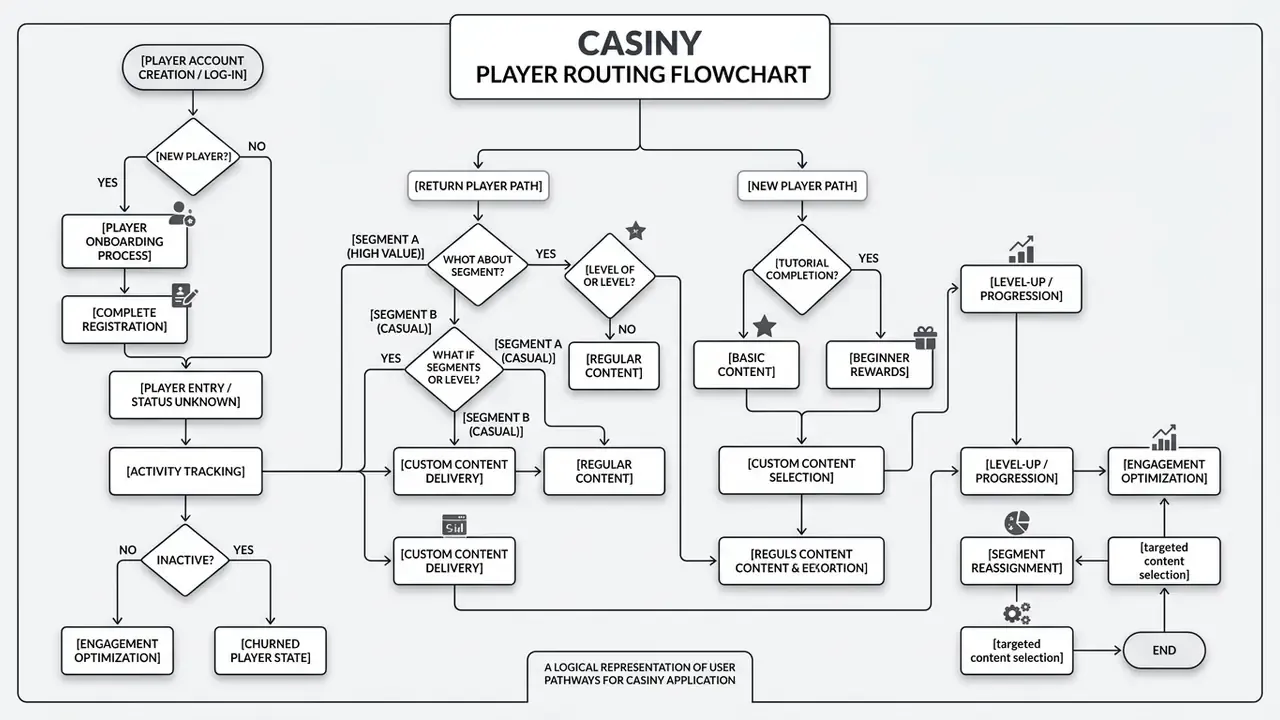
Player routing: choosing between a poker room and a poker casino based on goals

Semantic markup: <figure> / <figcaption>; descriptive alt text with keys poker room and poker casino.

Comparison of online poker, live poker and casino poker formats by mechanics and features

FormatPrimary environmentPace of play (hands/hour)Dealer formatDemo mode access
Online pokerDigital interactive networks (desktop/mobile)Fast (60+ single table; 100+ multi-tabling)Automated RNGHigh availability
Live pokerPhysical venues or clubsModerate (25-35)Human dealerUnavailable
Casino pokerIntegrated online or physical casinosVariable (often faster than peer-to-peer)House-banked (Human or RNG)Moderate (online only)

The data confirms that standard online poker delivers structural advantages regarding accessibility and pace. Yet concurrent multi-tabling significantly alters the required concentration levels and, as shown above, increases the risk of problem gambling behaviour.

Poker rules every beginner should know before play

Poker rules dictate the hierarchy of card combinations, mandatory betting structures, and the sequence of actions allowed during a hand. The most widely adopted format, Texas Hold'em, establishes the Royal Flush as the highest attainable five-card combination. Before participating, understanding the mechanics of blinds, pot limits, and the exact staging of community cards prevents fundamental mathematical errors.

Standard conditions apply relatively uniformly across digital and physical venues, governed by strict rulebooks outlining foul play, collusion, and timeout penalties. Getting a firm grasp of these limitations remains the single most effective form of risk mitigation.

Poker rules every beginner should know

A study on self-reported gambling harm found that one in seven gamblers reports at least one adverse outcome, with online gambling being a significant predictor of higher harm levels. - "Harm-to-self from gambling", PubMed Central (2024). https://pmc.ncbi.nlm.nih.gov/articles/PMC11220818/

Texas Hold'em hand rankings: the complete cheat sheet

Before you sit down at any table, demo or real money, memorise the hierarchy of poker hands from strongest to weakest. Every decision in Hold'em revolves around knowing where your five-card combination sits within this ladder:

  1. Royal Flush - A, K, Q, J, 10, all of the same suit. The unbeatable hand.
  2. Straight Flush - Five consecutive cards of the same suit (e.g. 9♠ 8♠ 7♠ 6♠ 5♠).
  3. Four of a Kind (Quads) - Four cards of identical rank (e.g. K♣ K♦ K♥ K♠).
  4. Full House - Three of a kind plus a pair (e.g. 10♥ 10♦ 10♠ 4♣ 4♦).
  5. Flush - Any five cards of the same suit, not in sequence.
  6. Straight - Five consecutive cards of mixed suits (e.g. 8♦ 7♠ 6♣ 5♥ 4♦).
  7. Three of a Kind (Trips/Set) - Three cards of the same rank.
  8. Two Pair - Two distinct pairs (e.g. J♣ J♠ 5♥ 5♦).
  9. One Pair - A single pair of matching cards.
  10. High Card - When no combination is made, the highest individual card plays.

When two players hold the same ranking, kickers (side cards) determine the winner. Suits carry no ranking value in standard Texas Hold'em. If hands are truly identical, the pot is split equally.

Texas Hold'em hand rankings the complete

How a poker game round usually goes

A standard poker game round progresses through strict sequential phases: preflop, flop, turn, river, and showdown. Here is the step-by-step flow:

  1. Blinds posted - The player to the dealer's left posts the small blind (typically half the big blind). The next player posts the big blind.
  2. Hole cards dealt - Each player receives two private cards face down.
  3. Preflop betting - Starting from the player left of the big blind, each participant must fold, call the big blind, or raise.
  4. The Flop - The dealer reveals three shared community cards. A second betting round follows.
  5. The Turn - A fourth community card is dealt. Another betting round follows.
  6. The River - The fifth and final community card appears. The last betting round takes place.
  7. Showdown - If two or more players remain, they reveal their cards. The best five-card combination wins the pot.

This structural flow means that mathematical variance resolves over extended play volumes. Understanding each phase prevents timing errors and ensures you always know the minimum and maximum wager permitted at any point. Seems straightforward, right? In practice, the pressure of real stakes makes each phase feel very different.

How a poker game round usually

Common rule differences in live dealer and casino poker

Live dealer events and casino poker variants impose house-specific rule modifications that alter probability models. In Casino Hold'em, the active dealer must possess a qualifying hand, typically a pair of fours or better, to evaluate the main bet. If the house fails to qualify, the participant's additional wager returns without profit, and the ante pays evenly.

Casino formats frequently incorporate side bets. A bonus wager on holding a pair of Aces or better (the "AA Bonus") may offer payout scales reaching 100:1 for a Royal Flush, 50:1 for a Straight Flush, 40:1 for Four of a Kind, and 7:1 for a pair of Aces through to a Straight. Unlike standard multiplayer Texas Hold'em where four betting rounds occur, Casino Hold'em compresses the action into a single decision point after the flop, with the Turn and River dealt simultaneously.

Beyond Casino Hold'em, Australian players encounter other popular house-banked variants in live casino lobbies:

Common rule differences in live dealer
  • Ultimate Texas Hold'em -Players go head-to-head against the dealer with the option to make larger raises (3x or 4x the ante) early, or smaller raises (2x or 1x) after seeing more cards. The earlier the raise, the greater the potential reward.
  • Three Card Poker -A fast-paced game using only three cards per hand. The dealer must hold Queen-high or better to qualify, and an Ante Bonus pays on Straights or better regardless of the dealer's hand.
  • Caribbean Stud Poker -Five cards per hand, with a progressive jackpot side bet. The dealer needs Ace-King or higher to qualify.
Casiny heading-banner

Time constraints present another critical variation. Automated and live dealer systems enforce rigorous 15-to-30-second action timers, bypassing the deliberate consideration permitted in unmonitored home settings. If you have ever felt rushed at a live table, that timer is the reason.

Poker demo vs real money: which option gives the better start

Choosing between poker demo interfaces and real-money deposits involves examining the stark contrast between mechanical learning and the psychological pressure of genuine stakes. Demo credits offer zero financial liability to assess interface functionality, calculate pot odds, and memorise hand strengths. Real-money environments require strict compliance with limits and introduce tangible consequences for poor decision-making.

Adolescents who engaged in simulated gambling at ages 16-17 had a 40 percentage-point higher probability of real-money gambling at ages 18-19. - AIFS Research Snapshot "What is the link between video gaming and gambling?" (2024). https://aifs.gov.au/growing-australia/research/research-snapshots/what-link-between-video-gaming-and-gambling

Lifetime participation in simulated gambling (excluding free loot boxes) is consistently associated with real-money wagering and gambling problems among young people. - Russell et al., "Order of first-play in simulated versus monetary gambling" (2023). https://www.greo.ca/Modules/EvidenceCentre/files/Russell%20et%20al%20(2023)_Order%20of%20first-play%20in%20simulated%20versus%20monetary%20gambling_final.pdf

These findings underscore that demo play is not a consequence-free zone. It can shape long-term gambling trajectories, especially for younger users.

When poker demo is the smarter choice

Using a demo mode represents the logical initial step for learning interface layouts and memorising game rules without risk. Software platforms often provide tooltips and interactive tutorials explaining the core functions of the digital table. Trial access grants an individual exactly enough exposure to determine whether the game volatility and pace match their recreational expectations.

Social casinos provide free chips and optional in-app purchases, structurally replicating real casino mechanics without the ability to withdraw winnings. - ACMA Social Casinos Market Snapshot (2023). https://www.acma.gov.au/sites/default/files/2023-03/Market%20overview_Social%20casinos%20in%20Australia.pdf

However, treating play-money tables as an accurate reflection of human competitive behaviour guarantees strategic failure. Opponents deploying virtual credits discard mathematical logic, inflating the frequency of random bluffs and multi-way pots. I should clarify: the demo is best treated purely as an operational tutorial. Learn the buttons, the timing, and the interface layout. Do not mistake it for genuine competitive experience.

What changes when you move to poker real money

Transitioning to monetary stakes introduces market mechanics and emotional cascades entirely absent during simulated play. Unpredictable slippage, precise opponent bet-sizing, and palpable loss aversion replace reckless play-money dynamics.

Approximately 5-8% of online poker players exhibit signs of problem behaviour and account for over 60% of cumulative net losses in study samples. - Poker-ai.org Behavioural Report (May 2025). https://poker-ai.org/2025/05/

Players who doubled their session frequency in the first six months were four times more likely to exhibit problem behaviour by the end of their second year. - Poker-ai.org Behavioural Report (May 2025). https://poker-ai.org/2025/05/

Users switching abruptly from virtual credits to monetary stakes often experience rapid depletion due to unmanaged tilt. The implementation of an active terms-check and bankroll-limit prompt during the real-money transition within an iGaming compliance framework forced systematic pauses. Players who adopted rigid pre-set deposit limits and session time caps were observed to sustain their predetermined bankrolls for substantially longer periods, supporting the principle that mandatory friction prevents reactionary betting. (Note: independent large-scale studies quantifying this effect are still emerging; platform-reported data should be interpreted with caution.)

Pros and cons: Poker demo play versus real money operations

Users switching abruptly from virtual credits
AspectPoker demo formatsPoker real money
Financial riskEliminated. No real capital loss possible.High. Tangible impact requiring bankroll management.
Simulation accuracyLow. Opponents play irrationally with no fear of loss.High. Accurate reflection of genuine betting psychology.
Speed of adaptationFast for rules and interface; poor for building discipline.Slower. Requires adjustment to real loss aversion and tilt management.
Learning valueOptimal for interface mechanics and hand-ranking memorisation.Optimal for pot-odds calculation and emotional control.

⚠️ Responsible Gambling Notice: This information is general in nature and does not replace professional advice. If gambling stops being entertaining, seek support immediately: Gambling Help Online - gamblinghelponline.org.au | Phone: 1800 858 858 (free, 24/7).

Live dealer poker and live casino formats

Live dealer and live casino poker formats merge the technological efficiency of digital wager placement with the tangible presence of standard casino operations. Streamed directly from high-definition studios using Augmented Reality (AR) integration, including facilities operated by Evolution in Romania, Malta, and Michigan, these tables allow remote participation while a human professional dictates the pacing. Players see floating statistics, card histories, and interactive elements overlaid directly on the gameplay feed through their browser.

Such setups rely heavily on robust network infrastructure and software providers like Evolution or Pragmatic Play. While visually immersive, the environment demands the explicit understanding that underlying house edges remain entirely mathematical. The global live dealer casino market exceeded USD 12 billion in 2024 and is growing at roughly 25% per year.

Live dealer poker and live casino

What makes live dealer poker different from standard online poker

The fundamental separation between live dealer setups and standard RNG models comes down to operational tempo and social mechanics. Standard software concludes hands in roughly 30 seconds, facilitating aggressive multi-tabling. Live dealer poker elongates to 1-2 minutes per hand, with average session durations stretching to 36 minutes compared to 18 minutes for RNG play.

Live tables feature floating statistics, chat interfaces, and physical card dealing tracked by digital overlay systems. This format removes the isolation of digital avatars but incorporates platform-driven promotional prompts designed to keep users seated. Something to watch for.

What makes live dealer poker different

Licensed operators are increasingly deploying AI for personalised promotions, content creation, and identifying harmful or fraudulent behaviour in gambling. - ACMA "AI and Interactive Gambling" Sector Developments Report (2026). https://www.acma.gov.au/sites/default/files/2026-04/AI%20and%20interactive%20gambling_0.pdf

Recognising the shift from standard fast-folding to methodical live viewing dictates a necessary adjustment in user endurance and attention management.

Who benefits most from live casino poker

Participants seeking lower operational speeds and visual confirmation of card dealing gravitate toward live casino poker. It works well for individuals treating the session as extended entertainment rather than a high-volume statistical grind.

However, the proximity to other highly volatile offerings requires caution. Live casino dashboards prominently feature slot games and rapid table games nearby. Without a predefined session duration and a rigid loss limit, the immersion provided by a human dealer may inadvertently extend exposure to the operator's broader algorithmic product suite. If you find yourself clicking through to slots after a poker session, that is the design working as intended, not your curiosity.

Who benefits most from live casino

Poker strategy basics for better decisions

Effective poker strategy depends entirely on mitigating risk through mathematical discipline, positional awareness, and strict financial segregation. Ignoring fundamental limits guarantees extended losses regardless of a player's perceived tactical edge. An effective approach prioritises self-control over aggressive bluffing mechanics.

A documented methodology involves identifying positive Expected Value (EV), which is the average amount you win or lose per decision over time, comprehending the correlation between position and wager sizing, and rigorously managing session constraints. Long-term performance relies strictly on maintaining these boundaries during volatile outcomes.

Poker strategy basics for better decisions

Beginner strategy for online poker play

Beginner tactics for digital platforms instruct a tight-aggressive methodology supported by rigid starting hand charts. On a full-ring table (9-10 players), this means opening roughly the top 15% of dealt combinations. On shorter 6-max tables, expanding cautiously to the top 20% establishes a secure mathematical baseline. These ranges are widely recommended by poker training communities, though precise percentages shift depending on position. For example, a balanced strategy on the small blind in 6-max may open 39-47% of hands, while early position stays around 15-17%.

Here is a practical step-by-step approach for your first sessions:

  1. Set a hard session bankroll limit - Never take more than 5% of your total poker bankroll to a single table. If your bankroll is AUD 500, your maximum buy-in is AUD 25.
  2. Stick to premium hands early - In early position, play only strong pairs (TT+) and big Broadway cards (AK, AQ). Expand slightly in late position.
  3. Use pot odds to guide calls - If the pot is AUD 100 and you need to call AUD 20, your pot odds are 5:1. Only call if your chance of completing a drawing hand exceeds roughly 17% (1 ÷ 6).
  4. Never chase losses - If you hit your loss limit, leave. No exceptions.
  5. Review your hands after each session - Identify spots where you deviated from your plan.

Equally paramount is establishing a segregated bankroll. Research into early play patterns supports this discipline: players who doubled their session frequency in the first six months were four times more likely to develop problem behaviours by the end of their second year (Poker-ai.org Behavioural Report, May 2025). Ignoring session limits during initial onboarding correlates with significantly higher rates of later account self-exclusion.

Beginner strategy for online poker play

Strategy adjustments for live poker and dealer tables

Adjusting to live parameters requires shifting focus from exploiting opponent mistakes toward managing specific house-edge paytables. In casino variants, strategic output depends on comparing your combinations against the published payout matrix. Expected Value (EV) calculations determine every hold or fold decision. For example, in Casino Hold'em, when the dealer fails to qualify with a pair of fours, the Ante pays 1:1 and the Call bet pushes. That is a specific mathematical outcome absent from peer-to-peer poker.

A player observing aggressive table play in live peer-to-peer games must tighten their range, increasing opening wagers to isolate weak holdings and prevent unprofitable multi-way pots. In very loose live games, multi-way pots occur far more frequently than online, making bluffs less profitable and premium-hand value paramount. Patience forms the core defence against the slower resolution rate of live formats.

E-E-A-T Fact Check: A widespread misconception suggests demo credits perfectly simulate genuine table dynamics. Industry evaluation proves virtual play fails to trigger loss aversion or realistic opponent folding ranges. Furthermore, relying entirely on intuition without calculating EV guarantees failure in casino variants. Strategy remains vital across all formats, and platform terms dictate value long before cards dictate wins.

Strategy adjustments for live poker and

How to choose the best poker room or poker casino for your goals

Selecting a platform requires assessing verifiable regulatory licences, withdrawal transparency, provider density, and responsible gaming infrastructure. Promotional capital is completely irrelevant if the entity operates illegally or restricts cashouts through obscure wagering policies.

Assessing a brand involves locating clear compliance data, checking complaints registers, and ensuring the local jurisdiction explicitly permits participation. Identifying the correct digital environment depends directly on matching the operational intent, whether that is learning, high-volume grinding, or casual live viewing, with the specific operator category.

How to choose the best poker

Choosing a poker room for demo, strategy and regular play

Identifying a suitable peer-to-peer room demands strict examination of the player pool volume and rake caps. A trusted poker room provides 24/7 liquidity, transparent software audits (verifying RNG integrity), and distinct divisions separating play-money lobbies from real-money action.

Reviewing the UI for responsible protection tools, specifically mandatory deposit limits and session time-outs, is mandatory. Platforms failing to provide accessible self-monitoring frameworks fail fundamental safety reviews. Full stop.

A parliamentary committee recommended restricting loot box purchases to persons aged 18+ and increasing transparency of in-game spending to protect young people. - House of Representatives Social Policy and Legal Affairs Committee Report, Chapter 6 (2023). https://www.aph.gov.au/Parliamentary_Business/Committees/House/Social_Policy_and_Legal_Affairs/Onlinegamblingimpacts/Report/Chapter_6_-_Simulated_gambling_and_gambling-like_activities

These broader regulatory recommendations reflect an increasing push to hold platforms accountable for player-protection measures at every level. When evaluating poker rooms, look for operators that have adopted these principles voluntarily, not just those forced into compliance.

Choosing a poker casino for live dealer or real money play

For Australian players, the critical consideration is that no offshore online casino holds a valid Australian licence, because no such licence category currently exists. Regulators like the MGA (Malta) or UKGC (United Kingdom) govern their own jurisdictions but do not extend player protections to Australians. If you choose to access an offshore platform, understand that ACMA may block the site at any time and that you have no recourse under Australian consumer law if disputes arise.

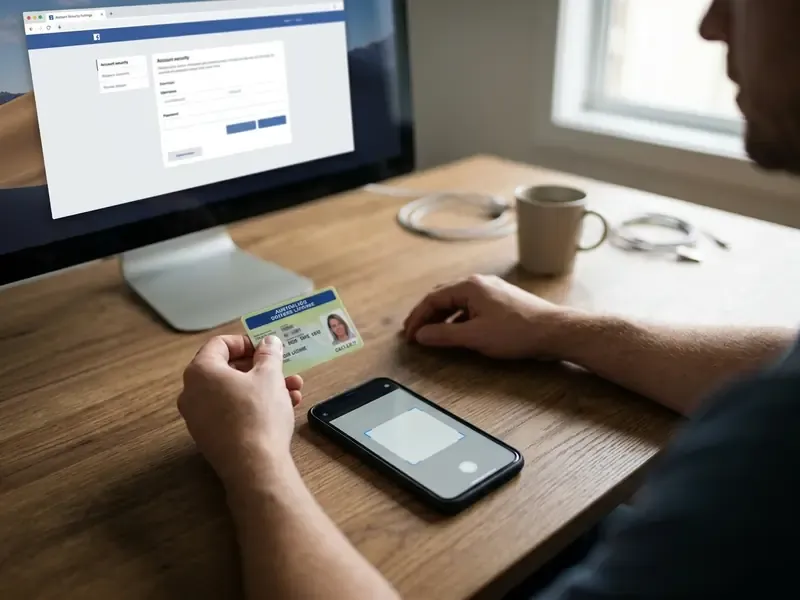
A competent poker casino, where permitted, requires verifiable regulatory licensing in its own jurisdiction alongside premium streaming integration from providers like Evolution or Pragmatic Play. Low-latency feeds and explicitly transparent Know Your Customer (KYC) verification procedures separate professional operators from predatory sites.

Choosing a poker casino for live

Semantic markup: <figure> with data-duration attribute; text transcript or step list adjacent for SEO indexing.

Payment methods commonly available to Australian players on offshore platforms (where accessible):

  • Cryptocurrency (Bitcoin, Ethereum) - Fastest processing (often under 1 hour for withdrawals), no bank intermediary.
  • Bank transfer - Typically 3-5 business days; some platforms charge conversion fees for AUD.
  • Prepaid vouchers (e.g. Neosurf) - Deposit only; separate withdrawal method required.
  • E-wallets - Where available, processing usually within 24-48 hours.

Always compare withdrawal processing speeds and verify the absence of hidden dormancy fees in the fine print. An informed user reads the specific bonus exclusions, identifying exactly which games restrict wager contributions before allocating funds. Watch for predatory conditions such as maximum cashout caps on bonus winnings or unrealistic wagering multiples (40x or higher).

Regulatory Disclaimer: Access to online casino features, real money poker applications, and live dealer platforms is strictly governed by regional legislation. Pursuant to the Interactive Gambling Act 2001 (as amended 2017), online casino-style interactive gambling services are prohibited for Australian residents. ACMA enforces compliance through site-blocking and financial transaction disruption. Always verify current local legality, terms of service, and operator licensing before making financial decisions. This article is for informational purposes only and does not constitute legal, financial, or medical advice. If gambling stops feeling recreational, engage immediate support: Gambling Help Online - gamblinghelponline.org.au | 1800 858 858.


Where to play live poker in Australia

While online real-money poker remains restricted, Australia's live poker scene is among the most vibrant in the Southern Hemisphere. Here are some of the major venues hosting regular tournaments and cash games:

  • Crown Melbourne (Southbank, VIC) - Home to the Aussie Millions and the largest poker room in the Southern Hemisphere with over 50 permanent tables. Weekly tournaments at all budget levels plus satellites to major events.
  • The Star Sydney (Pyrmont, NSW) - Hosts the Sydney Poker Championships and regular ANZPT events, with weekly tournaments and daily cash games.
  • The Star Brisbane / Queen's Wharf (Brisbane, QLD) - A multi-billion-dollar integrated resort now hosting WPT Australia Championship events and APLPT Queensland series on a massive new poker floor.
  • Crown Perth (Burswood, WA) - Open extended hours Thursday through Sunday with tournaments ranging from AUD 50 freezeouts to AUD 4,000+ high-roller events. Cash games run around the clock. Dress code requires neat casual and proper footwear at all times.
  • Adelaide Casino (North Terrace, SA) - The "Poker Zone" features frequent guaranteed prize-pool tournaments and regular cash games, open Monday to Saturday.
  • Jupiter's Gold Coast (Broadbeach, QLD) - No Limit Texas Hold'em cash games seven days a week, with buy-ins starting at AUD 100.

Live poker is legal across all Australian states and territories, open to residents and visitors alike. The Australian Poker League (APL) also runs professional-grade tournaments through pubs and clubs nationwide, offering million-dollar guarantees in non-casino environments. If you are newer to the game, these pub events are a genuinely good entry point. Lower stakes, relaxed atmosphere, and you still get the competitive structure.

Where to play live poker in

Glossary of key poker terms

TermPlain English definition
BlindsMandatory bets posted before cards are dealt. The small blind (half) and big blind (full) rotate around the table each hand.
RakeThe fee the poker room takes from each pot or tournament entry, typically around 5% with a cap.
EV (Expected Value)The average profit or loss of a decision over many repetitions. Positive EV (+EV) means profitable long-term.
BankrollThe total amount of money you have set aside exclusively for poker. Never use rent money.
Pot oddsThe ratio of the current pot to the cost of a call. Helps you decide whether drawing to a hand is mathematically worth it.
TiltEmotional frustration causing irrational, undisciplined play, usually after a bad beat.
Multi-tablingPlaying multiple tables simultaneously online to increase volume. Raises both opportunity and risk.
KYC (Know Your Customer)Identity verification process required by regulated platforms before processing withdrawals.
RNG (Random Number Generator)The certified algorithm that determines card distribution in online poker, audited by independent labs.

FAQ: Poker online in Australia

Is online poker legal in Australia?

As of mid-2026, no. The Interactive Gambling Act (as amended in 2017) prohibits offshore operators from offering real-money online poker to Australian residents. ACMA actively blocks non-compliant sites. Live poker at licensed venues is legal in every state and territory. The federal government has expressed support for a future onshore licensing scheme, but no framework has been created yet.

Do I pay tax on poker winnings in Australia?

Generally, no. The Australian Taxation Office (ATO) treats gambling winnings as non-taxable for recreational players. However, if poker is your primary source of income and you operate as a professional, winnings may be assessed as assessable income. Consult a registered tax agent for individual advice.

Can I use a VPN to play on offshore poker sites?

While VPN usage itself is not illegal in Australia, using a VPN to circumvent ACMA site blocks and access prohibited gambling services places you in a legally grey area with no consumer protection. If a dispute arises, you have no recourse under Australian law.

What is the safest way to start playing poker?

Begin with free demo tables at a reputable platform to learn the interface and hand rankings. Set hard deposit and session time limits before your first real-money hand. Never play with money you cannot afford to lose.

Where can I get help if gambling becomes a problem?

Contact Gambling Help Online at gamblinghelponline.org.au or call 1800 858 858 (free, 24/7). Every state also has dedicated face-to-face counselling services.

Last updated: July 2026. Content reviewed by the editorial team in accordance with our E-E-A-T publishing standards.